There Is No “Why” in the World#3
Cultural hegemony

Cultural hegemony is a concept proposed by Antonio Gramsci, referring to the process by which a dominant group presents its worldview as if it were a universal truth, leading other groups to accept it naturally. In history and politics, this does not simply mean the exercise of power. It functions as a narrative device that determines where the causal chain of past events is considered to begin.

We often ask the question “Why?” about events. However, this question usually does not explore the entire chain of causation. Rather, it resembles the act of cutting that chain at a particular point. Depending on where that starting point is placed, the world can be reconstructed into a completely different story.
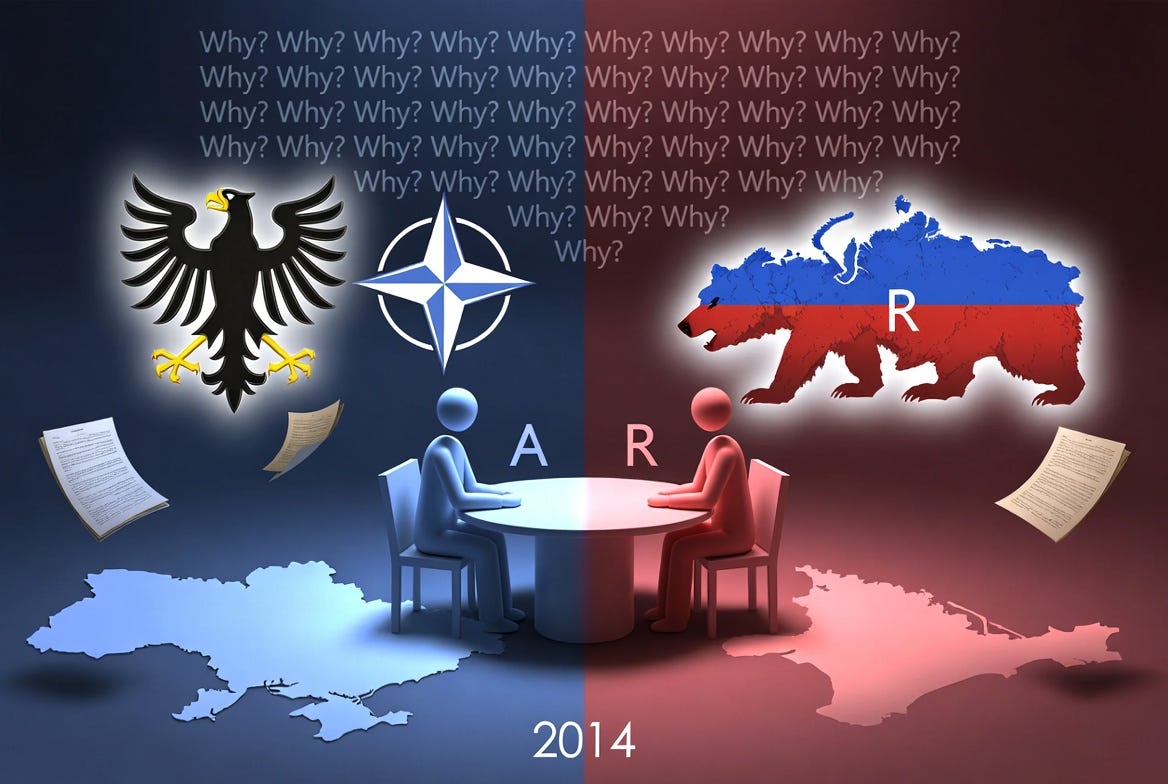
To understand this mechanism, let us imagine a hypothetical debate surrounding Russia’s Annexation of Crimea (2014) and the U.S.-led NATO bombing of Yugoslavia (1999).
Hypothetical debate: The Endless “Why?”
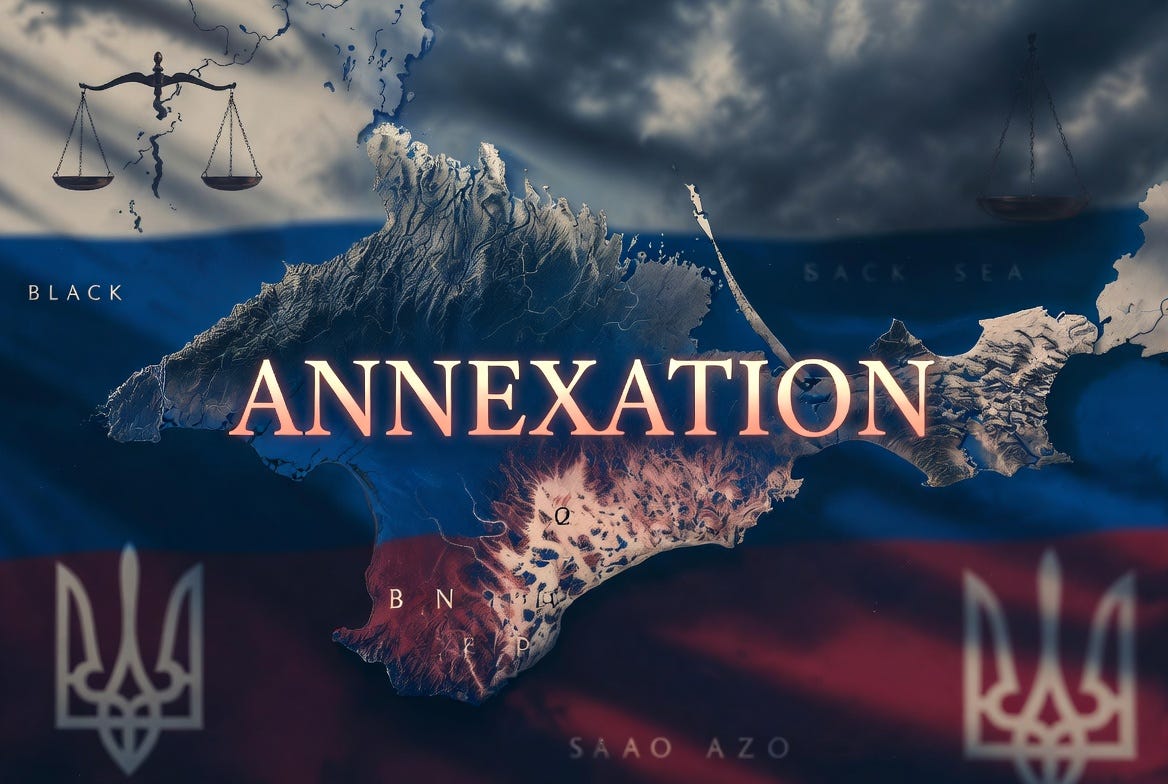
A: Why did Russia attack and annex Crimea? That is clearly an act of aggression. It violates international law and ignores Ukraine’s sovereignty.
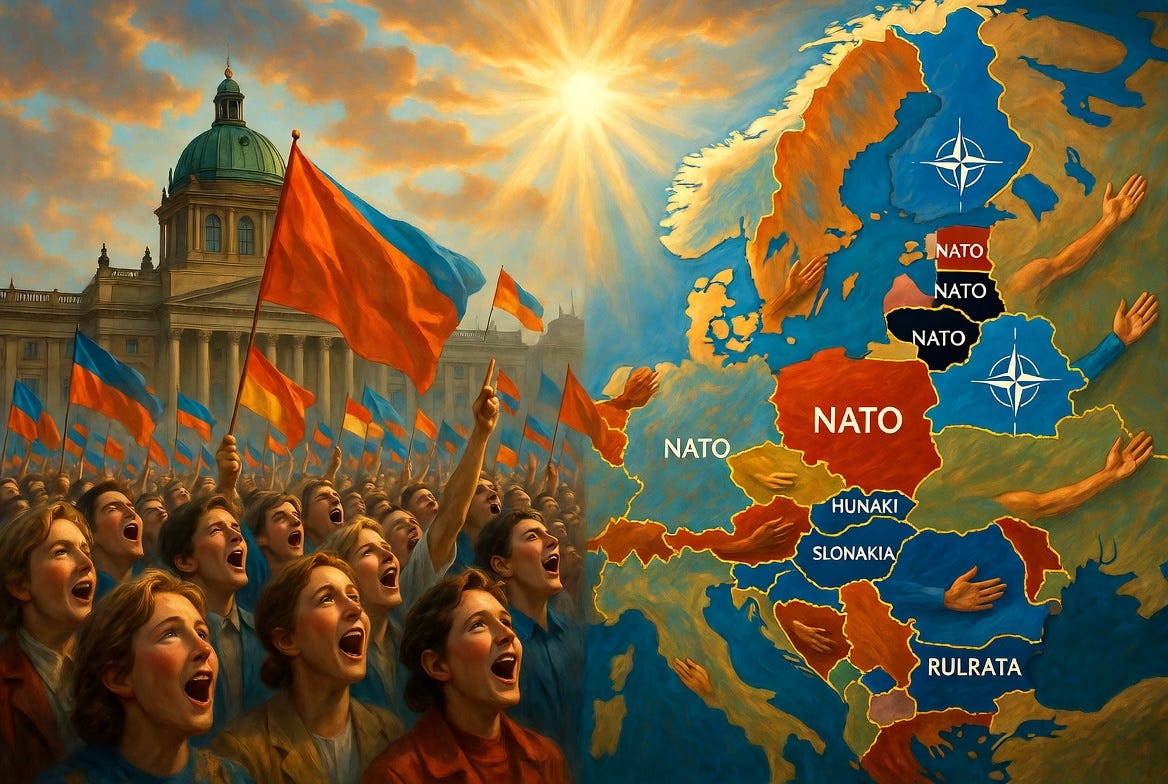
R: Aggression? That happened because of the pro-Western coup in Ukraine in 2014, the Maidan revolution. Most residents of Crimea are ethnically Russian, and they needed protection. Besides, the United States did not honor the Budapest Memorandum of 1994. Ukraine gave up its nuclear weapons in exchange for security assurances from Russia, the United States, and the United Kingdom, yet you continued expanding NATO eastward. Why did you do that?
A: The Budapest Memorandum? That was simply an agreement after the collapse of the Soviet Union. NATO expansion was the voluntary choice of each country, not a forced invasion. Why are you invoking promises from the Soviet era to justify present actions? The countries of Eastern Europe wanted to escape Soviet domination in the 1990s. Why couldn’t you accept the collapse of communism like Czechoslovakia during the Velvet Revolution in 1989 or the states that emerged from the conflicts of Yugoslavia in the 1990s?
R: Yugoslavia? That is ironic. Why did the United States bomb Yugoslavia in 1999 through NATO airstrikes? You destroyed civilian infrastructure under the pretext of protecting Kosovo Albanians. That intervention had no authorization from the UN Security Council. Why did you do that? Was it not part of Western hegemony attempting to suppress Slavic nationalism?
A: That was to prevent genocide. The Milosevic regime was committing atrocities in Kosovo. Why do you distort that as an invasion? It originated from the Yugoslav wars of the early 1990s, when Serbia attacked Croatia and Bosnia. Why was your Slavic nationalism so violent?
R: The Yugoslav wars? They happened because the West tried to divide the Balkans after the collapse of the Soviet Union. Why did the United States support Croatian independence and provide arms in the early 1990s? Was that not part of American hegemonic expansion after the Cold War? Why do you always package imperialism in the language of human rights?
A: The Cold War? That began when the Soviet Union occupied Eastern Europe in the 1940s. Why did Stalin turn Czechoslovakia into a communist state? That was because...
(The debate falls into an infinite loop. Each “why?” pulls another link from the past, yet it never reaches an end.)
In the Western narrative, the story begins with Russia’s aggression in Crimea. In the Russian narrative, it begins with NATO expansion or the political upheaval in Ukraine. The bombing of Yugoslavia is interpreted in a similar way. In Western accounts it is framed as humanitarian intervention, while in Russian accounts it is seen as an illegal military attack.
Language further reinforces these narratives. In English discourse the dominant term is “annexation,” whereas in Russian narratives words such as “protection” or “restoration” are often used. Even when referring to the same event, the choice of words alters the structure of causality and the moral judgment attached to it.
Through this process the world is reconstructed into a simple moral dichotomy. The in-group becomes the righteous victim, while the out-group is cast as the source of evil. This is precisely where Gramsci’s concept of cultural hegemony operates. Once a particular narrative becomes accepted as the universal explanation, it begins to determine the very starting point of the event itself.
In the end, rather than examining the entire chain of causes, we choose where the story begins. And the point we choose is what we call “why.”