The ideological similarity between Naraku and Nietzsche: 95%

“Humans are always talking about destiny and fate.
Such words are nothing more than the empty chatter of the powerless.
Those with true strength are not dragged along by fate—
they create it with their own hands.”
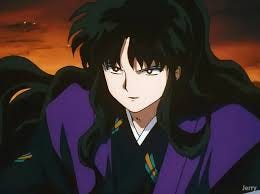
This is a line spoken by Naraku, the antagonist of the anime Inuyasha I watched as a child. Back then, it sounded like nothing more than the usual villain bravado.
But now, the line strikes me as strangely philosophical.
So I asked an AI:
“How much does this statement overlap with Nietzsche’s philosophy?”
The answer was an unexpected 95 out of 100.
And when you think about it carefully, the line does in fact resemble something Nietzsche could have said. Nietzsche’s core concept, the “Will to Power,” is the force that refuses to accept one’s fate as given, restructures it actively, and creates entirely new meanings out of it.
The dichotomy between “the weak who are swayed by fate” and “the strong who create fate”
is almost identical to Nietzsche’s own.
What is more interesting is that Naraku’s narrative itself embodies
a Nietzschean paradox of self-creation.

Naraku was originally a pitiful, immobilized bandit named Onigumo.
After being saved by Kikyo,
his twisted desires and hatred reincarnated into the half-demon Naraku.

Throughout the series, one repeated motif remains central:
“Naraku is Onigumo, and yet he is not Onigumo.”
He is swayed by Onigumo’s desires,
yet simultaneously believes he has transcended Onigumo.
Therefore, he can tell himself:
“I am not dragged along by fate.
I am the one who creates it.”
This contradiction—
the desires of someone controlled by fate
combined with the self-narrative of someone who denies fate—
is what forms Naraku’s identity.
And this, precisely, is Nietzschean.
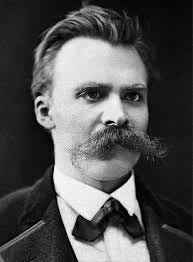
Nietzsche’s Übermensch denies his past self while creating a new self within that very denial. Naraku too carries the “trace of the weak” called Onigumo,
yet he attempts to remake himself by rejecting or reinterpreting that trace.
Thus, Naraku’s line is more than villainous posturing.
It is a declaration from a being who has embraced, in his own way, the immense contradictions of fate, desire, and self-creation.
Naraku’s most frequently used abilities—clones and barriers—
are also philosophically significant.
Each clone is both part of Naraku and not Naraku, replicating his desires and will while also acting independently.
This mirrors exactly the identity of “being Onigumo and not Onigumo” at the same time.
Naraku’s clones form a fractal self-narrative.
Each clone inherits fragments of Naraku’s desire, yet reinterprets, magnifies, or distorts them.
A single will generates multiple versions of the self.
This resembles Nietzsche’s idea of repeated self-overcoming:
the Übermensch is not born once but created over and over
by shedding previous selves.
His barrier technique also carries symbolic weight.
barriers function as a refusal to let anyone examine his inner depths.
Naraku himself avoids confronting the traces of Onigumo,
and he blocks others from seeing that abyss as well.
Naraku avoids the gaze entirely and hides the abyss behind a veil from which he generates new selves.
Taken together,
Naraku is something closer to a philosophical experiment—
an interplay of fate, desire, fragmentation, and self-creation.
His similarity to Nietzsche is no coincidence.
Tragically, in the story Naraku is defeated by the fairy-tale logic of “heroes of justice.”
But in the final moment, Naraku accepts the truth he had denied and craved all his life: his desire for Kikyo was at the core of his being.
He finally confronts his own abyss, not to reject it, but to acknowledge it as part of his narrative.
It is the self-integration he had postponed his entire existence.
Was it too abstract to expect children to understand that this was not simply a villain’s defeat?