Spectrum Thinking vs Dichotomy
The Hannah Arendt Problem

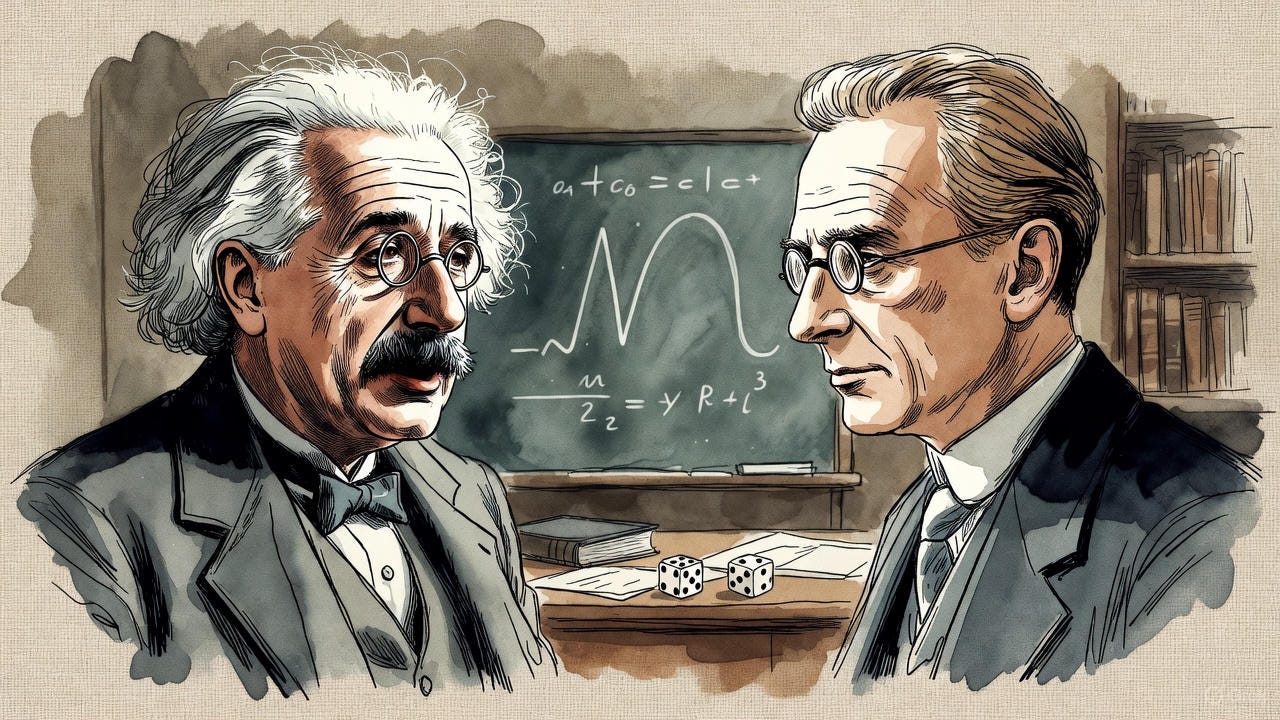
Einstein said, “God does not play dice.”
And Bohr replied, “Einstein, stop telling God what to do.”
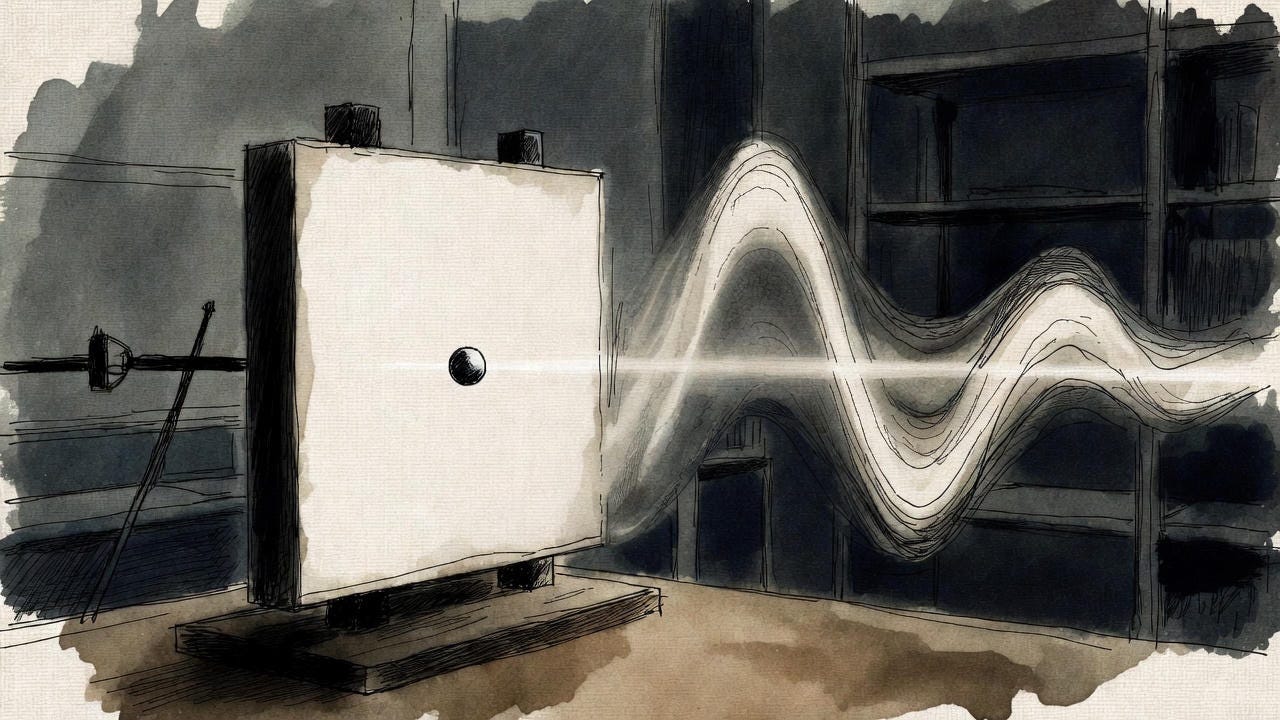
This brief exchange is a declaration that classical ways of thinking can no longer fully capture reality.
When a single electron can be both a particle and a wave at the same time,
the dichotomy of “it is a particle or it is not a particle” collapses.
Later, this “strange principle” becomes the new common sense of science.
In fact, the cracking of dichotomies has existed long before quantum mechanics.
Philosophers and logicians already knew these limits.
Aristotle’s law of the excluded middle goes like this:
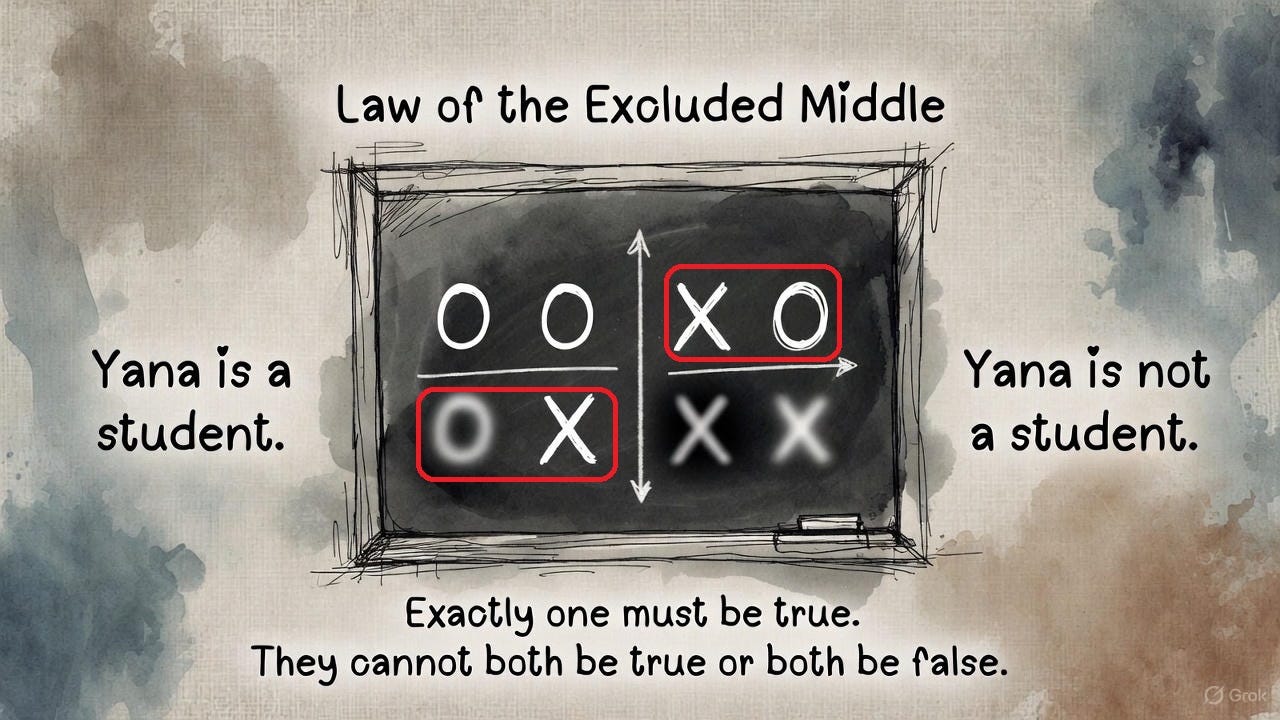
“Yana is a student.”
“Yana is not a student.”
One of these must be true, and they cannot be both true or both false at the same time.
The category of “student” clearly divides into two.
But let us consider a different case.
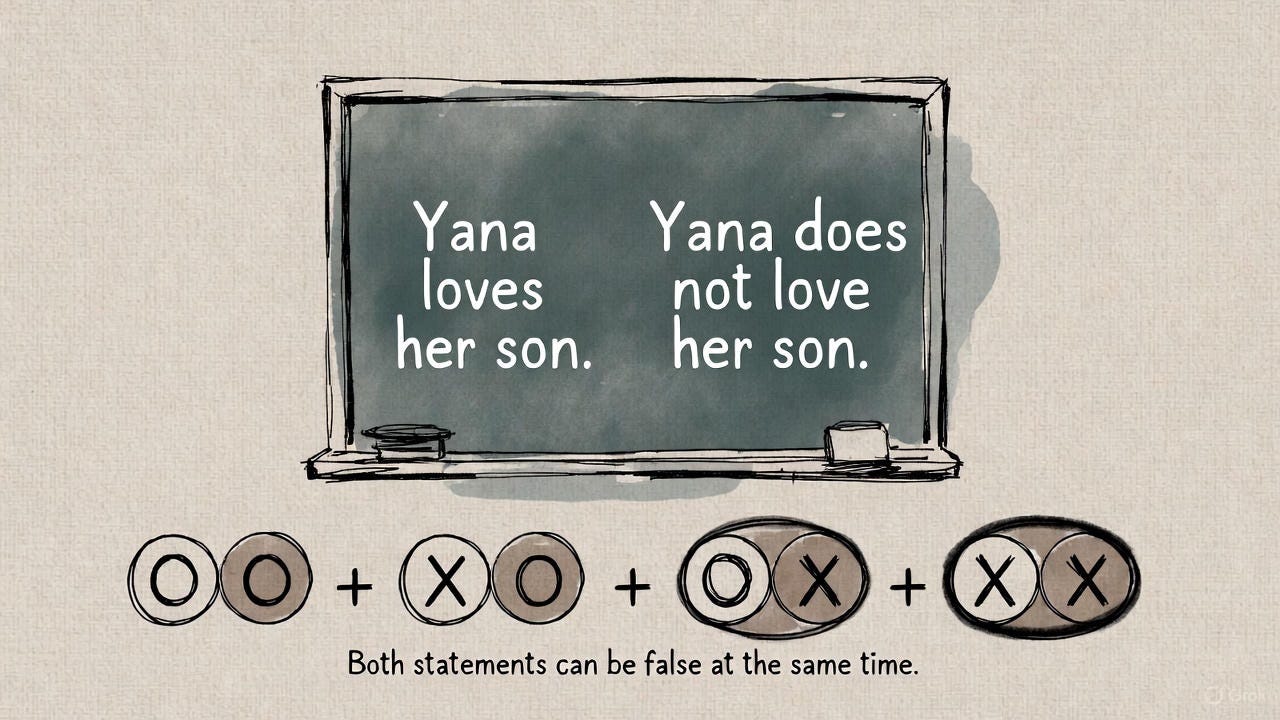
“Yana loves her son.”
“Yana does not love her son.”
It is impossible for both statements to be true at the same time.
But they can both be false at the same time.
If Yana is indifferent to her son, then both statements become false.
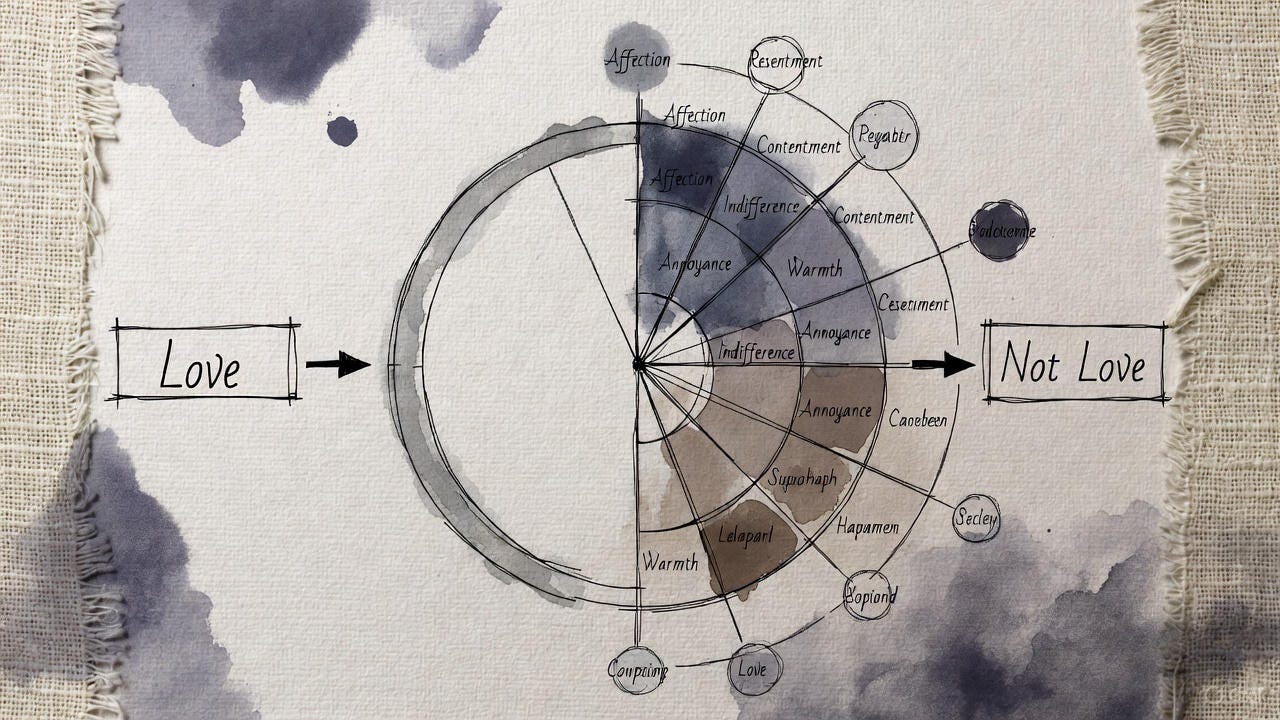
If someone divides emotion strictly into “love or not love,”
Yana may appear inconsistent, strange, or even unintelligent.
But that is only because emotion is not structured dichotomically.
Perhaps the most vulnerable point of dichotomous thinking is the problem of false equivalence.
Consider Hannah Arendt.
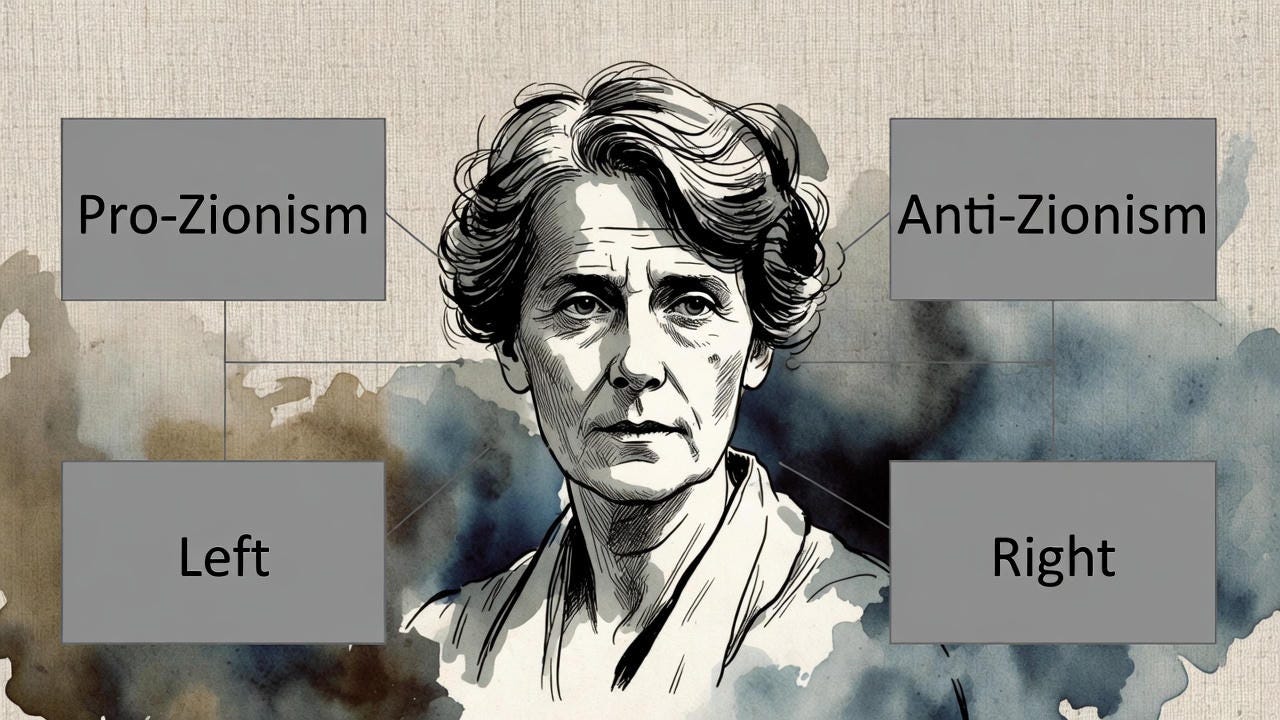
To outsiders, she may have seemed like someone who criticized Zionism.
But in reality, both the supporters and the opponents of Zionism attacked her.
She never wished to belong to either side in the first place.
Eichmann in Jerusalem may be one of the most difficult books for humans to understand.
Its complexity can serve as a highly intellectual strategy:
“If you lack the ability and the will to understand my thinking, do not dare to refute it.”
But in reality, such a strategy does not work.
Most people tried to force Arendt into one of their dichotomous boxes.
She showed, with her entire being, that some realms cannot be contained by dichotomy.
Still, it is hard to say that dichotomy itself is fundamentally wrong.
Dichotomy is, in fact, another name for rationality.
Human cognition cannot receive all information without distortion.
We must interpret some parts of the world through the framework provided by other parts.
It is like how a person cannot stand without the ground beneath their feet.
Dividing things into “right or wrong” is one of the most effective and powerful tools we have.
It is likely a tool that has survived since the dawn of humanity.
Postmodernism revealed how fragile that ground really was.
But it did not offer a new ground to replace it.
In the confusion that followed, holding onto the old ground might be a noble choice.
Spectrum thinking is not a simple horizontal line.
Reality resembles a high-dimensional hypercube composed of hundreds of axes:
economic liberalism, social progressivism, environmentalism, nationalism, techno-optimism,
cultural conservatism, individualism–collectivism,
and countless others.
Humans can consider many of these axes simultaneously.
But when this complex structure is projected onto a two-dimensional surface,
it becomes distorted into a simple left–right dichotomy.
Einstein’s statement, “God does not play dice,” may seem narrow-minded or outdated to some.
But is that really true?
Just because something looks simple
does not mean that the thinking behind it is simple.
What I loved most in this essay is how gently you expose the limits of dichotomy.
Emotion refuses to stand inside two boxes; thought stretches into far more dimensions than “yes or no.”
The example you chose shows this beautifully.☺️
Human feeling doesn’t collapse into simple propositions —
it breathes, shifts, contradicts itself, and still remains true.
Your reflection on Arendt and the way people tried to force her into categories she never belonged to was especially illuminating.
Some truths can only exist in that space beyond division,
where complexity is not a flaw but a form of honesty.