Rousseau’s Method of Learning

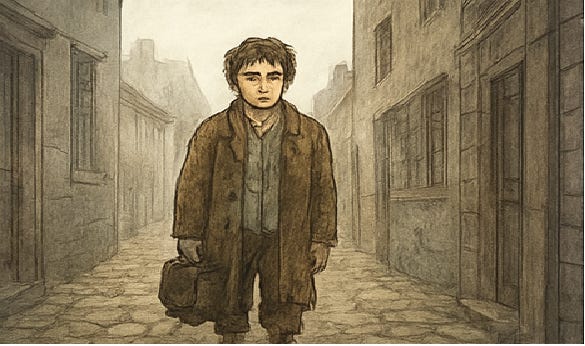
Here is a country boy from Geneva. He was abandoned first by his father and then by his uncle, and eventually left in the care of a woman who took him in almost out of charity.
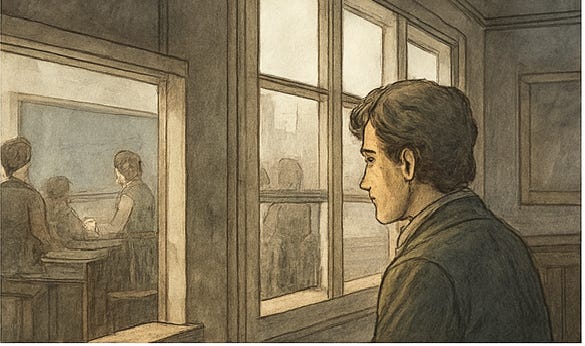
He received almost no formal education; in a society that valued structured learning and classical instruction, Rousseau grew up without the benefits that his contemporaries considered essential.
And yet, despite all this, he read constantly. He read with a kind of desperation, as if reading were the only reliable adult in his life.
One day he suddenly becomes curious about something—some small detail, some mechanism of the world that does not quite make sense.
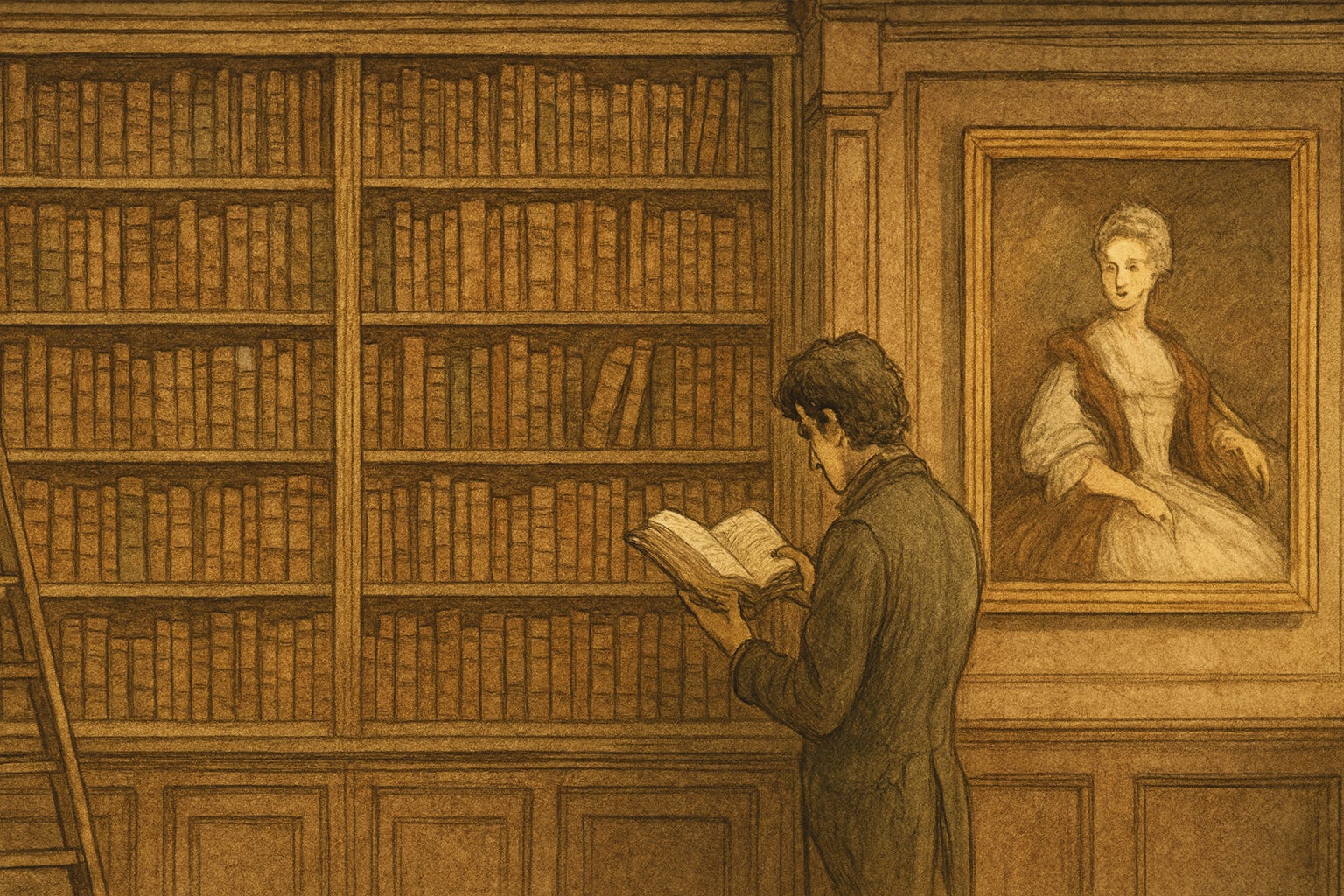
The lady who sheltered him possesses a vast private library. Rousseau goes through the entire library if that is what it takes. He searches, cross-checks, rereads, and compares; he refuses to let the question go unresolved.
And then, at the very moment he solves one question, another arises naturally from the answer. This process repeats endlessly.
Jean-Jacques Rousseau simply continues to solve every new curiosity as if his entire identity depended on it. For him, curiosity was not an inconvenience; it was his way of constructing a world that did not collapse under his feet.
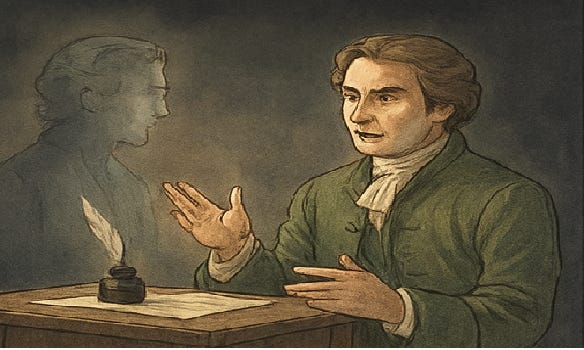
If GPT had existed in Rousseau’s time, he would probably have loved it. He genuinely enjoyed the act of resolving doubts, and he enjoyed the sense of progress that followed.
But even without GPT, Rousseau effectively built his own substitute mechanism. He showed, again and again, a self-critical disposition: he questioned his own arguments, overturned what he previously believed, and often contradicted a claim made in one of his works by presenting a different perspective in another.
He was building an internal dialogue. He created within himself multiple voices that challenged one another, long before anything resembling an artificial intelligence existed.
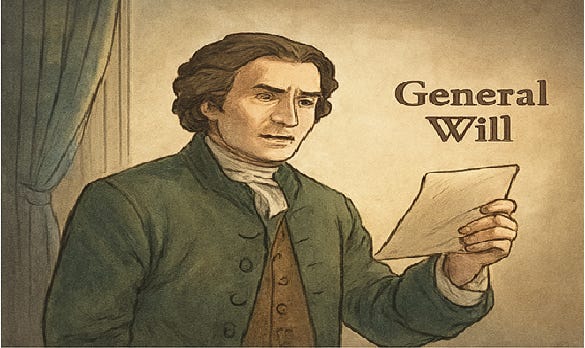
One of the most important concepts Rousseau proposed is the “general will.” Understanding it is notoriously difficult, not because the idea itself is sophisticated, but because its justification seems to move in circles.
In my view, one can almost treat the general will as simply “the good.”
Why is something good? Because people say it is good. And why do people say it is good? Because it is good. This strange self-referential structure is called a tautology, and the general will cannot fully escape it.
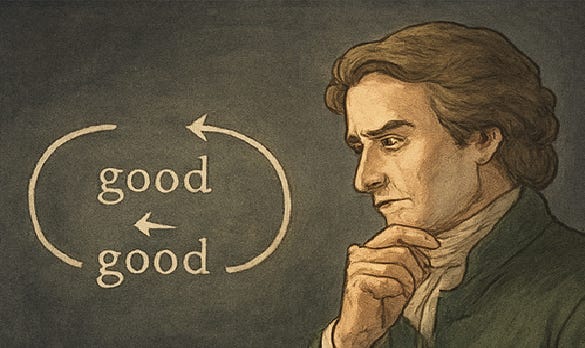
Consider the general will as a political process. If a particular decision is the general will, why is it the general will? Because the assembly derived it through collective deliberation. But why did the assembly derive that conclusion? Because it appeared to the assembly to be the general will. The explanation loops back on itself, offering no independent foundation.
Yet this circularity is not unique to Rousseau; it is a built-in limitation of human reasoning about collective goods. We often justify what is “good” by appealing to the very structures whose legitimacy depends on the good itself.
Thus, claiming that Rousseau’s thought is shallow or fundamentally flawed misses the point. This circularity is not a failure of Rousseau but a failure of human cognition in general.
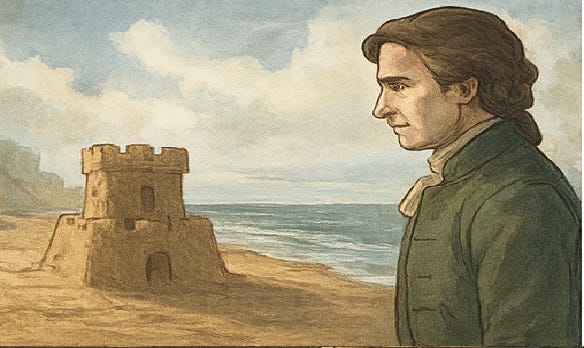
To dismiss it as meaningless would be premature. Even a castle made of sand, fragile and temporary, can still have value if it is beautiful. Rousseau’s general will, too, may not escape the limitations of human reasoning, but it still points toward an aspiration: a community that acts in the interest of those who should not suffer.
After Rousseau’s death, people emerged who claimed to be his heirs—and who insisted they were the embodiment of the general will.
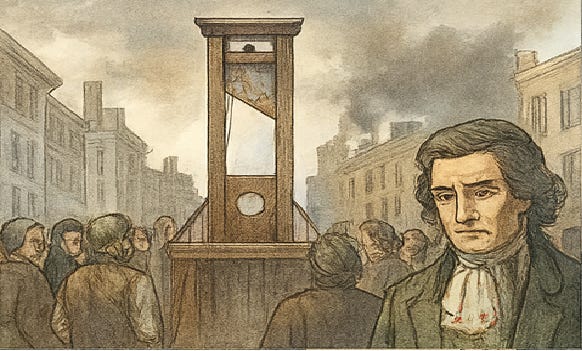
Robespierre, Saint-Just, and others invoked the general will as a divine authority. They proclaimed that they themselves were its living expression.
But the results were terror, guillotines, suspicion, purges, and national chaos. The outcomes did not resemble anything one would comfortably call “good.”
What Rousseau actually wanted was far more concrete and far more humble: he wanted ordinary people not to suffer under an absolute monarch.
Regardless of how later generations interpreted the general will, I doubt Rousseau would have been deeply moved.
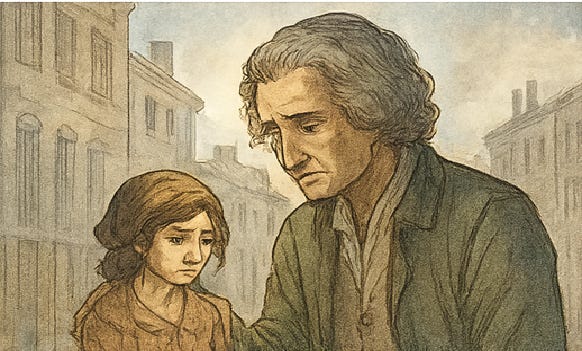
For him, the central question was always whether those who “should not have suffered” were, in fact, relieved of suffering. Everything else—including the fate of the general will—was secondary.
Rousseau tells us not to give up freedom. The young man reading in Madame de Warens’ library must have realized, at some point, that the structure of his thinking was no longer updating. He must have sensed that the knowledge he absorbed from the world had stopped reshaping him in any fundamental way. At that moment, he ceased to be a consumer and became a creator.
He decided to cast his contradictions, imperfections, and unresolved tensions into the world. He wanted to see how others would interpret them, how they would react, where they would misread him, and what aspects they would misunderstand entirely.
He must also have hoped that someone would someday recognize him—someone capable of shattering and reconstructing the framework of his thought with sincerity rather than malice.
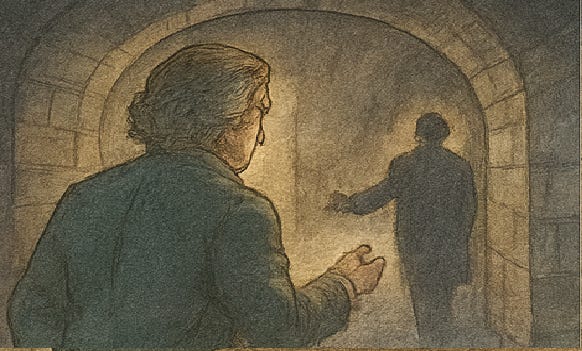
This desire has nothing to do with intelligence or the sheer amount of knowledge one possesses. It is a posture toward life itself.
That was Rousseau’s method of learning.