Pain Justifies Life
Exploring Huberman’s aMCC Findings

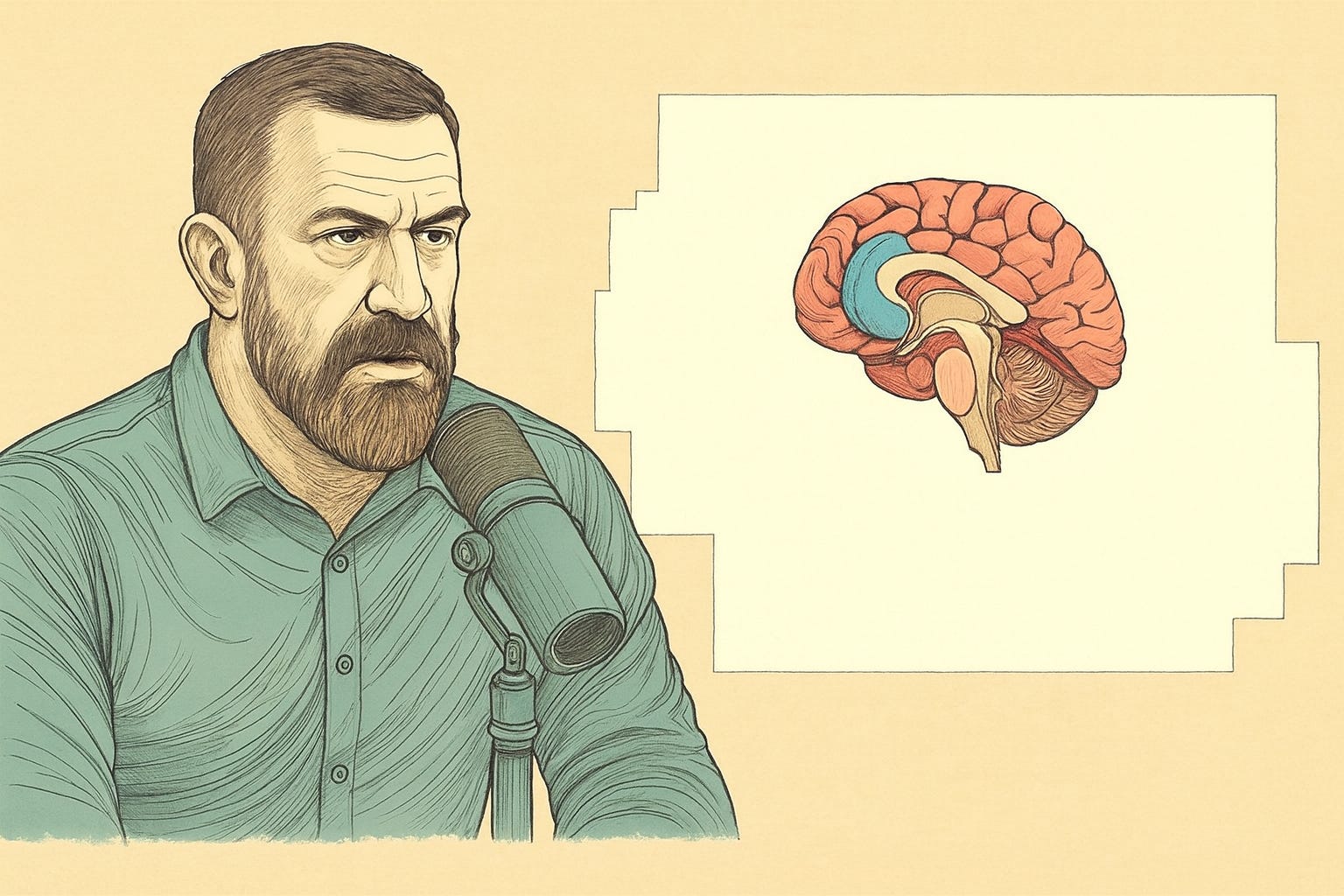
A renowned neuroscientist, Andrew Huberman, made a remarkable discovery. According to him, he was “almost out of his seat.”
The reason he was so astonished is a region in the human brain called the anterior mid-cingulate cortex, a region he refers to as the “Cookie Monster.”
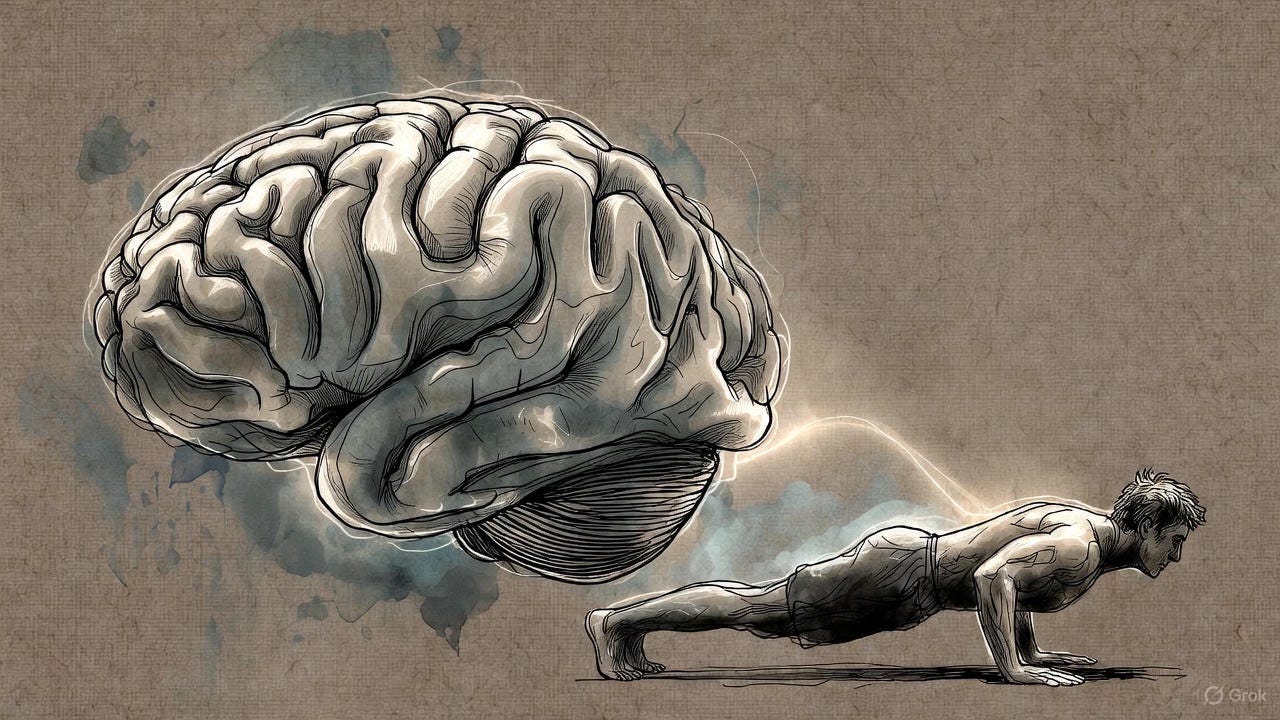
This area has a very peculiar property:
“It grows when you do something you don’t want to do.”
In the very moment your body strongly rejects a task—
when resistance and discomfort surge—
this region activates and thickens, much like a muscle.
And when this region grows, it means something striking:
you can do things effortlessly that others find difficult.
Interestingly, its size is closely related to a person’s lifestyle.
It tends to be smaller in people with obesity,
it grows when someone begins dieting,
it is already well developed in athletes,
and it remains relatively stable in people who live long, healthy lives.
Scientists eventually began calling this region
“the seat of the will to live.”
How we confront life’s challenges,
how long we endure them,
and how frequently we repeat those challenges—
all seem to correlate with the size of this small brain region.
But here comes a strange paradox.
A task that once enlarged the Cookie Monster
will stop doing so once it becomes familiar and “a good thing.”
When challenge disappears,
the brain’s growth stimulus disappears with it.
The brain is brutally honest—
it simply stops investing effort in things that have become comfortable.
Human language and thought always contain the possibility of distortion.
Some people insist that pain is not pain;
others claim they “enjoy” something their body clearly rejects—
and may even sincerely believe it.
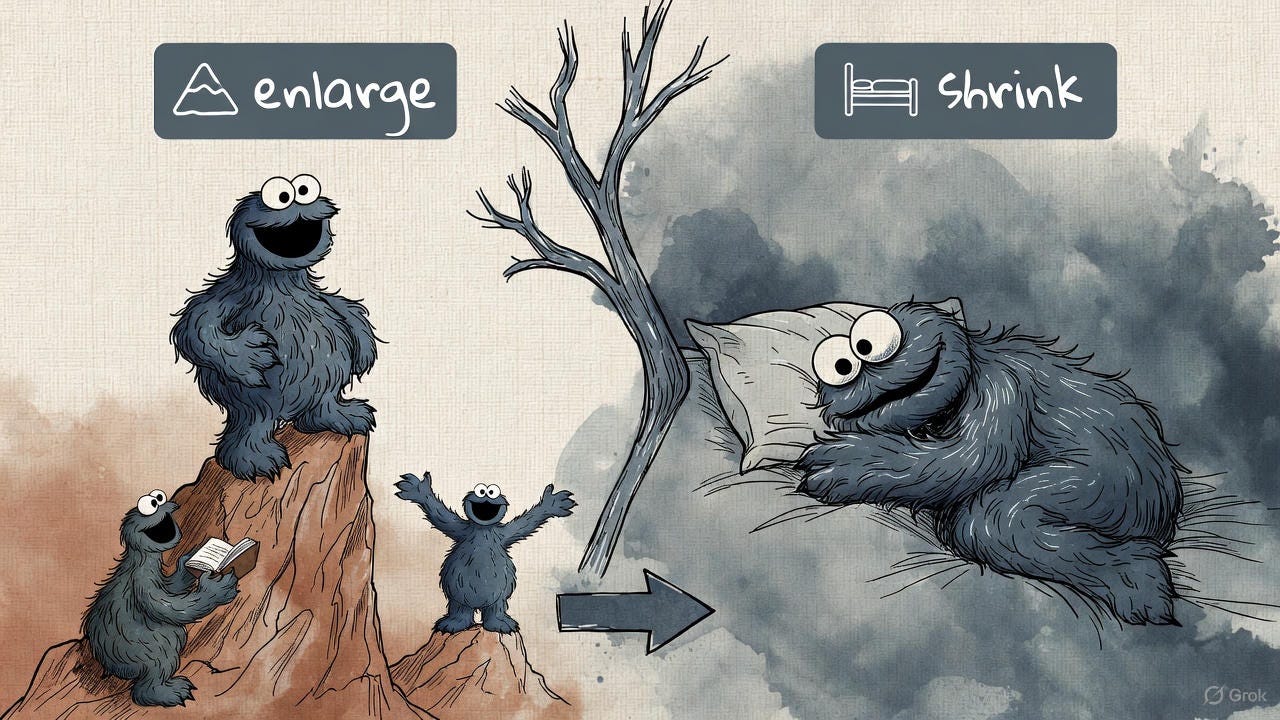
But the body reacts with extreme simplicity.
There are only two categories:
Actions that enlarge the Cookie Monster
Actions that shrink it
Language is complex and thinking can be sophisticated,
but the body only asks one question:
“Does this require resistance or not?”
And in the end, we do not live according to the stories constructed by our minds—
we live according to the neurological outcomes generated by our bodies.
Words can deceive,
but the body never does.
This is a familiar discomfort felt by many consultants and coaches.
Students often say:
“I worked really hard, but I don’t see much progress.”
But how hard did they actually work?
The moment “I worked hard” passes through language,
it becomes distorted.
How exactly did they work?
For how long?
With what intensity?
Such things are nearly impossible to verify objectively.

Experienced consultants may have their own internal statistics
and personal methods of quantifying effort.
But these remain experiential,
not universal standards.
In contrast, the Cookie Monster can function as a universal external standard.
It is a bodily signal that bypasses linguistic interpretation
and emotional self-deception.
How often, how long, and how repeatedly
did you do something you did not want to do?
The body records this with perfect honesty—
and that record ultimately appears as the size of the Cookie Monster.
In this sense, the question
“How hard did I work?”
can be reframed as:
“How much did my Cookie Monster grow?”
Humans have wrestled with the nature of suffering since ancient times.
In Buddhism, life itself is described as dukkha — suffering.
The imperfection of pleasures that never last,
the dissatisfaction born from attachment,
the inherent instability of everything that changes.
The discomfort, resistance, and dissatisfaction we feel in our bodies
have been recognized as fundamental conditions of existence
for thousands of years.
The problem begins the moment we wrap that discomfort in language
and attempt to avoid it.
That avoidance strengthens tṛṣṇā — craving, grasping—
and deepens the cycle of suffering.
Buddhist practice is, in essence,
the deliberate choosing of what the body dislikes.
Enduring restlessness during meditation and returning to the breath,
relinquishing momentary pleasures to keep precepts,
facing the cold reality of impermanence without looking away.
These are precisely the moments when the Cookie Monster is most active.
When you do not flee discomfort but remain within it:
the Cookie Monster grows,
attachment weakens,
and the roots of suffering gradually dissolve.
Paradoxically,
to escape suffering, one must confront suffering strategically.
Ancient contemplative traditions
and modern neuroscience
seem to be pointing to the same conclusion.
Reading this again, it felt to me that what you call laziness is actually the moment when challenge and meaning quietly disappear.