MacArthur Says ‘MacArthur Says…’

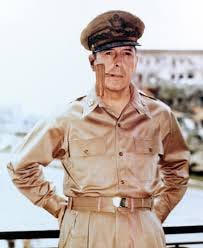
General Douglas MacArthur was likely a man whose pride reached its highest peak, and at the same time one of the most famous generals in American history. MacArthur was, so to speak, a silver spoon among silver spoons. When he was born, his father was already a general. In his memoirs, MacArthur recalled his childhood by writing, “Before I could read or write, almost at the same moment I learned to walk and speak, I learned to ride a horse and fire a gun.”
Under the guidance of Gertrude Hull, the principal of Milwaukee High School, whom his mother had personally arranged, Douglas prepared for the entrance exam and passed with a score of 93.3 out of 100. With a recommendation from Congressman Theobald, he eventually entered West Point. On June 11, 1903, MacArthur graduated first in a class of 93 cadets with a total of 2,424.12 points out of 2,470, the third highest graduation score in the history of West Point.
His overwhelming self-love became increasingly visible during World War I. He refused to wear a helmet in battle, choosing only a light field cap, and rushed forward with a pistol, shouting “Advance! Advance!” at his men. When his subordinates urged him to wear a helmet because it was too dangerous, he replied, “No German bomb can kill me.”
He even refused to wear a gas mask and led his troops barefaced, suffering two gas attacks that sent him to the hospital. But he believed that this kind of “show” inspired his soldiers, and he continued such behavior until the end of the war.
Perhaps because of that self-love, MacArthur became known for speaking in the third person. He did not say, “I think so.” Instead, he would say, “MacArthur thinks so.” To me, this feels less like simple arrogance and more like a kind of psychological defense mechanism. By putting forward the symbolic figure of “MacArthur,” a figure of victory and authority, instead of the unstable human self called “I,” he sought to exist not as a person, but as a symbol.
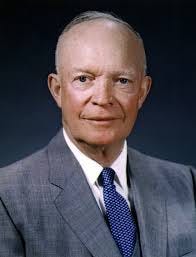
A figure who can be contrasted with MacArthur is the famous Dwight D. Eisenhower. Eisenhower was the opposite of MacArthur in almost every respect. His family background was modest, and he did not seem particularly outstanding in terms of raw ability. When MacArthur went to the Commonwealth of the Philippines, Eisenhower was appointed as a military adviser. He had no brilliant combat record. His strengths were paperwork, administration, and coordination.
But Eisenhower appears not to have wanted to become a lesser version of MacArthur. He was known as someone who truly listened when interacting with subordinates. And of course, Eisenhower never used the third person.
Eisenhower combined “you and me” into “us,” while MacArthur erased “me” and created “MacArthur.” It would be comforting to conclude, just because Eisenhower became president, that “us” is always better. But I am not so sure. The narrative of “the democratic approach is better” feels rather tiresome to me. Yet, at the same time, MacArthur does not seem all that lovable either.
MacArthur was dismissed in 1951, and he returned from Tokyo to Seoul, and from Seoul to Washington, almost as if he were being chased away. I believe that until the day he died, he thought, “I was never wrong.” Or perhaps he believed, “MacArthur was never wrong.”
And what about Eisenhower? Was he happy? He ushered in the nuclear age, warned of the dangers of the military industrial complex, yet also expanded it. In 1969, on a hospital bed, he died after saying, “I have killed too many people.”
Which one do you prefer?