Fast Labeling vs Slow Integrative Thinking

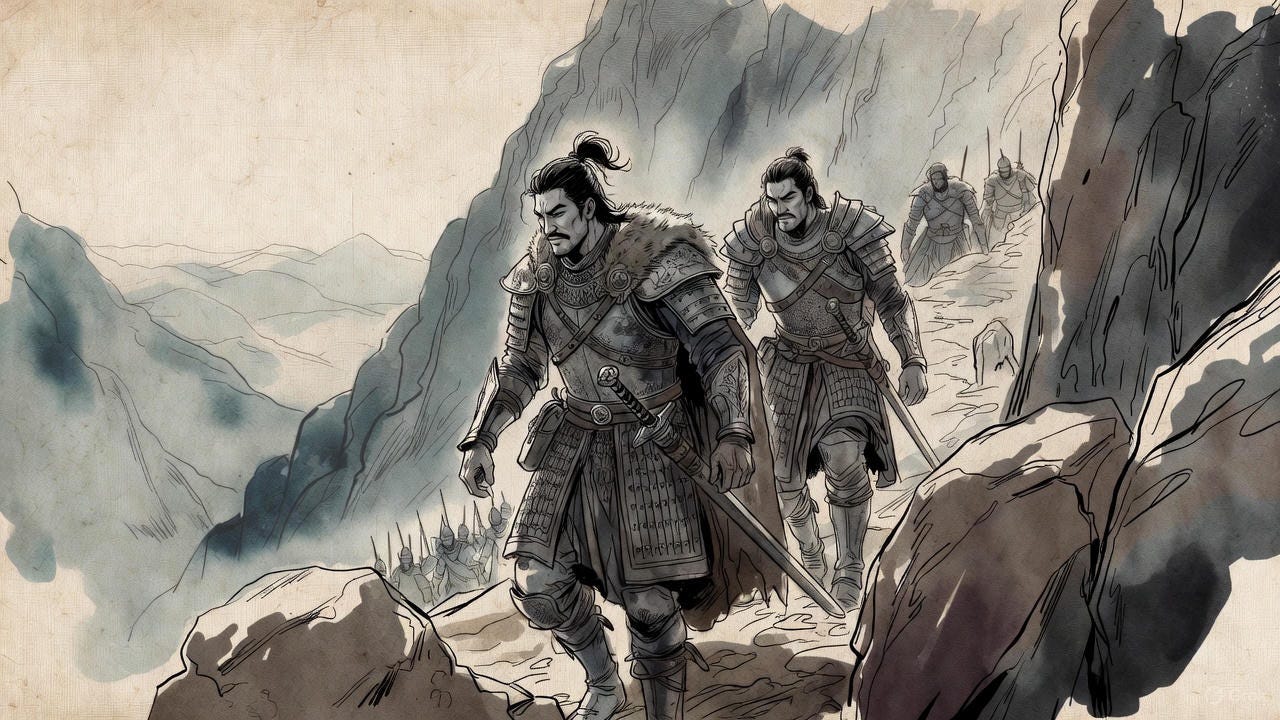
Here a warlord is climbing a mountain together with his two sworn brothers. His own forces are far too weak, so he has come to seek out a strange recluse strategist who lives deep in the mountains.
The warlord asks, “How can I ever unify the realm?”
Instead of answering with words, the recluse goes to the kitchen and drags out a massive bronze tripod with three legs.
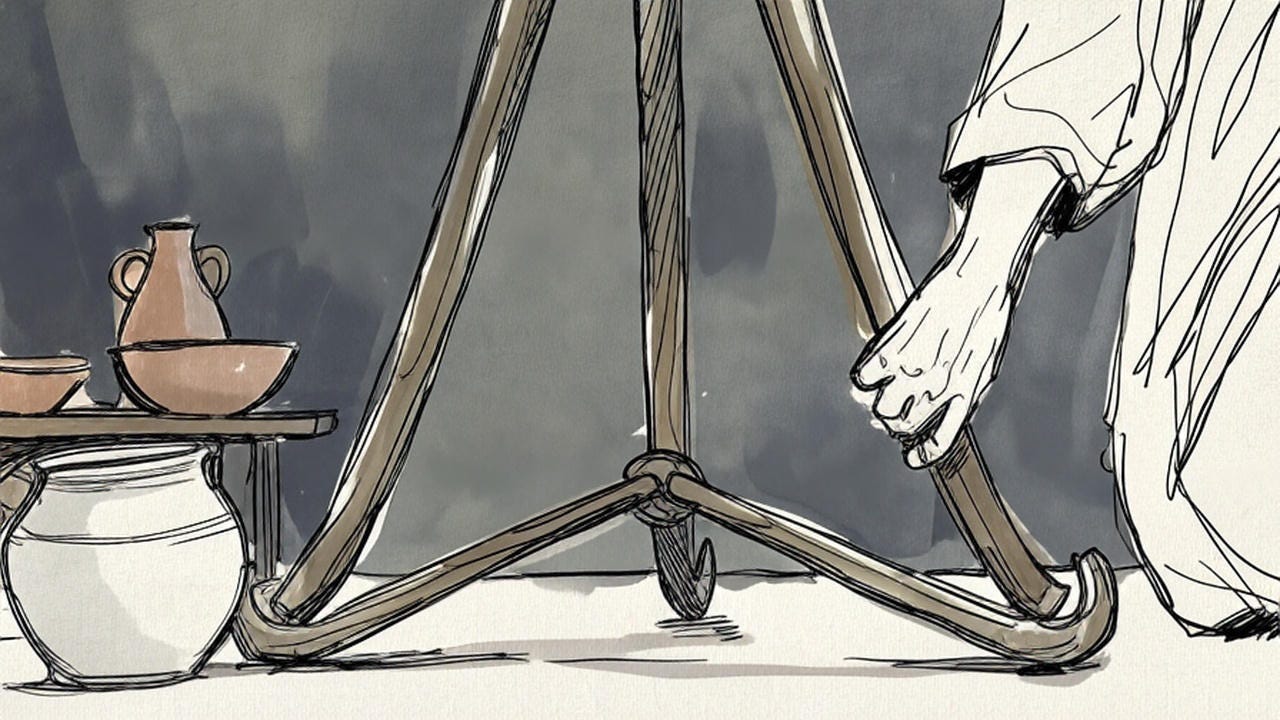
The recluse continues, “What happens if you try to stand this heavy cauldron on just one leg? No matter how thick and strong that single leg is, it will eventually tilt and fall. But what if it has three legs? Even if one is weak, the other two will balance it.”
Smiling, the recluse goes on, “Right now, your strength alone cannot hold up the world. Therefore, you must adopt the plan of dividing the realm into three, the strategy known as ‘dividing the empire into three parts.’”
The warlord is stunned on the spot and falls to his knees. With nothing more than a three-legged cauldron, the great direction for unifying the realm has been shown in an instant.
This is a classic example of a heuristic.

When there is no time to perfectly solve a complex and uncertain problem, you throw out one roughly correct simple analogy and reach a conclusion quickly. There is no need to calculate thousands of variables and probabilities one by one.
The recluse merely used the extremely simple model “cauldron equals the realm, legs equal powers” and immediately drew a practical, actionable answer.
The strengths of heuristics are two. First, speed. Second, feasibility. It does not give the perfect answer. It gives a sufficiently good answer that can be used right now. We live like this every single day.
“This person has a kind face, so he must be trustworthy.”
“It’s expensive, so the quality must be good.”
Without fast labeling, we could not get through a single day.
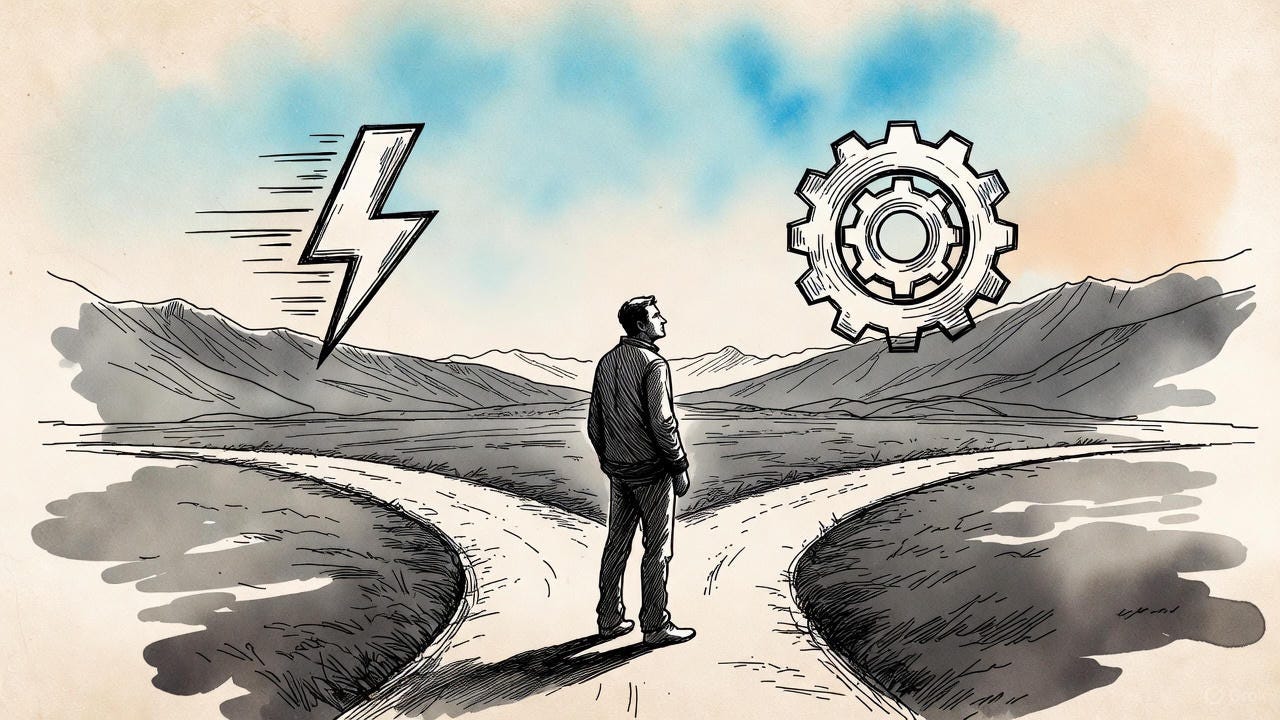
This is where Daniel Kahneman’s System 1 and System 2 thinking become relevant.
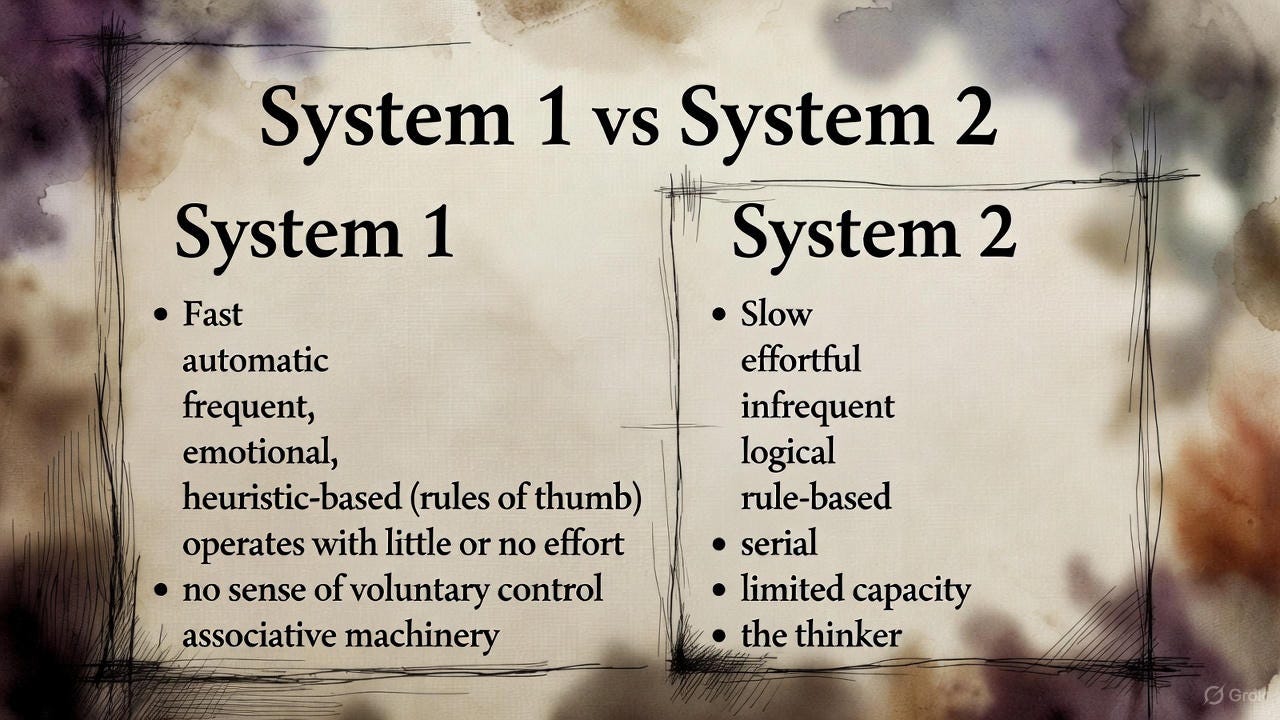
System 1 is fast, automatic, emotional, uses heuristics, but is highly vulnerable to bias.
System 2 is slow, effort-consuming, logical, and capable of thinking about thinking.
Many people regard the two as completely separate brains, but I do not see it that way. The real difference lies in whether cognitive pain arises or not.
The moment some people hear the three-legged cauldron analogy, they instantly go “Aha!” That is System 1 without any pain.
Others start questioning, “Why a cauldron of all things? Isn’t there a better metaphor? Is this really optimal?”
The moment they start questioning, cognitive pain appears and System 2 turns on.
In other words, System 2 begins the instant the brain declares that the existing fast labeling is no longer enough. Only by enduring that pain does deeper, integrative thinking become possible.

At this point, the twentieth century’s greatest philosopher, Ludwig Wittgenstein, comes to mind. The young Wittgenstein felt disgust at how easily the world assigns identities to one another. That is why he reached the extreme conclusion, “Of that which one cannot speak, one must remain silent.” He dismissed most everyday language as meaningless.
But as he grew older, he fell into an even deeper despair. He realized that even labeling something “meaningless” is itself another act of violence. Therefore, the later Wittgenstein completely reversed his position. He said, “The meaning of a word is its use in the language-game.”
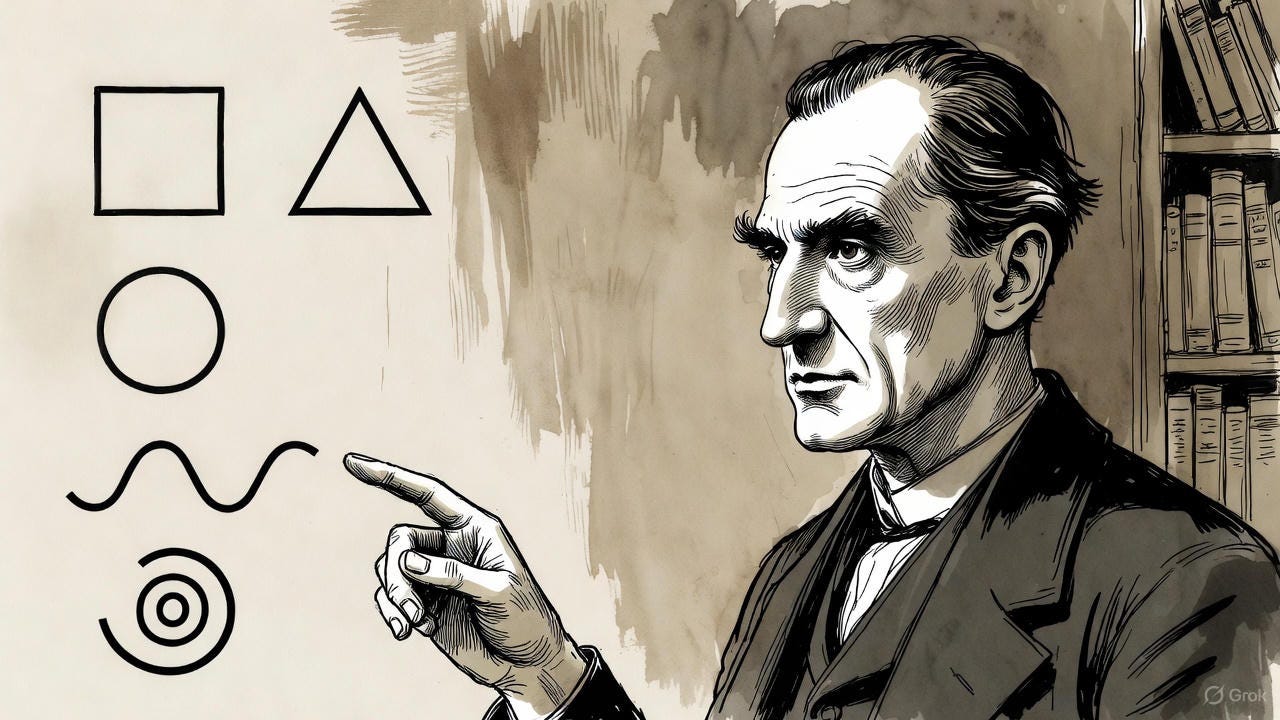
The moment we slap on labels “This is love,” “This is success,” “This is justice,” “That group is lazy,” within that language-game, painful questions are no longer needed.
At the same time, the very act of labeling itself becomes a force that reorganizes the order of the world.
Speaking becomes an act of creating the world.
The recluse’s three-legged cauldron was a stroke of genius in labeling. Yet at the same time, it was a wall that prevented the warlord from thinking any deeper.
That is the double-edged sword of heuristics.
In the end, we choose every day.
Will we live comfortably with fast labeling, or will we endure pain and engage in slow integrative thinking?
On most days, a heuristic like the three-legged cauldron saves us.
But when a truly decisive moment arrives, a moment on the scale of unifying the realm, we must pause for a second and ask ourselves,
“Does the label I just attached really explain everything?”
That question is probably the only switch that turns on System 2.