Essential vs Accidental
Why Nothing Is Fixed (Postmodernism · Post-Structuralism)

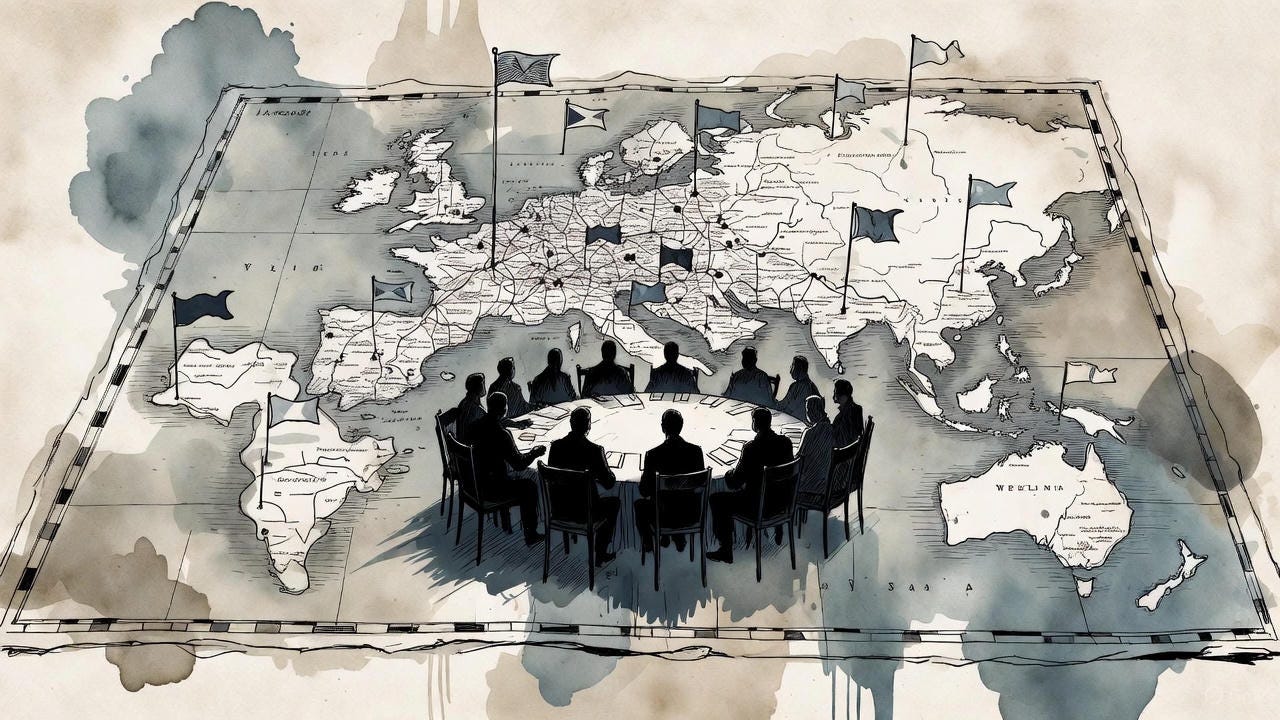
Here is an illegal organization with branches spread across various regions. Each branch is overseen by a local boss, and the gathering of these bosses is called “the Commission.” Yet they are neither representatives entrusted with the voices of their subordinates nor delegates empowered by a broader constituency.
Considering that the word commission originally refers to “a group of agents delegated with authority by others,” the choice of this name is peculiarly mismatched with their real organizational structure. The organization is strictly hierarchical, closed, and autocratic, and no mechanism of delegation exists anywhere within it.
Now let us turn to a state established in the late 9th century. This state was known as a principality, and its ruler bore the title of Grand Prince. Yet none of the surrounding great empires ever ruled the region or formally granted such a title.
Even so, the title possessed full ceremonial authority. That authority did not come from outside but was instead produced from within. The hierarchy was maintained not by genuine lineage but by collective acceptance—an agreement to treat fiction as political reality.
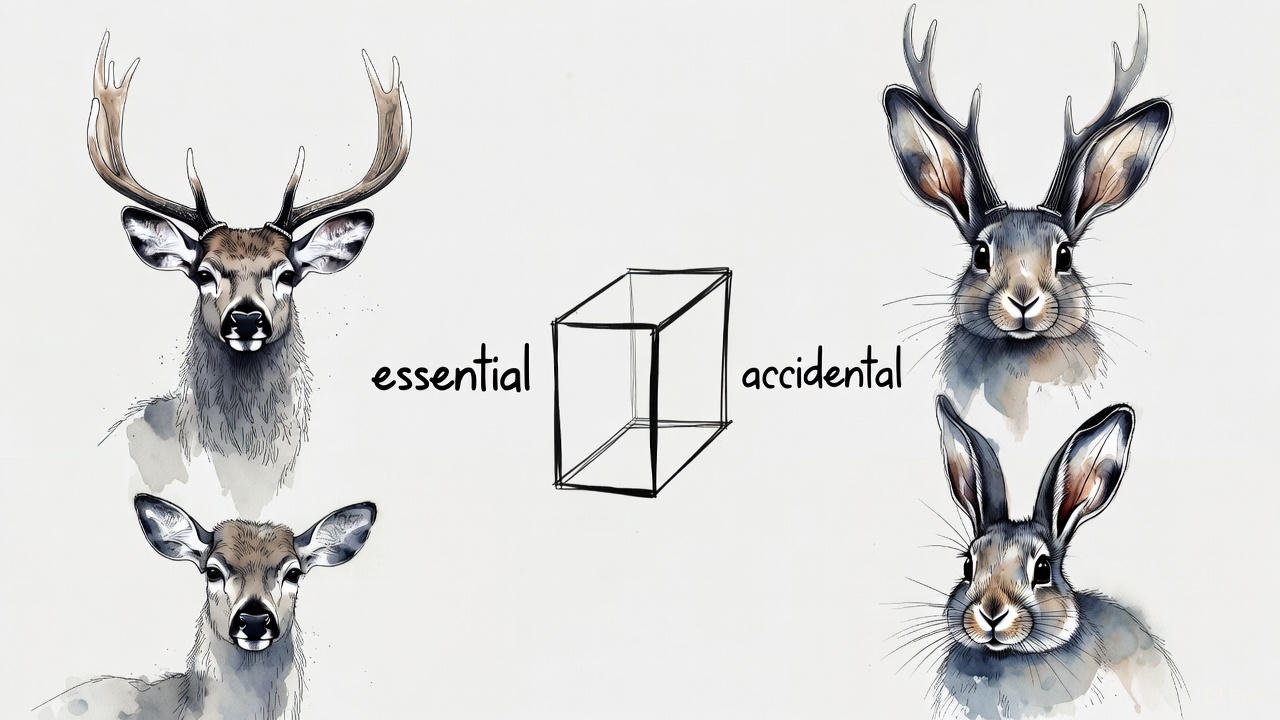
A concept gains identity only through contrast with other concepts. Such contrast is formed through the distinction between essential and accidental properties. An essential property is one without which the very existence of the thing collapses; an accidental property may change while the identity remains intact. However, no universal standard exists to verify this distinction. What one tradition considers essential may be treated as merely accidental in another.
In the word commission, the meaning of “delegated authority” may not be essential at all. Depending on the context, what matters more may be the impression of legality the term conveys. Likewise, even if the title of Grand Prince had never been granted by anyone, this posed no problem.
Even if the hierarchy resembled a complicated family drama—a self-invented genealogy—it was meaningful enough if it succeeded in providing political access or legitimacy. The success of such constructs shows that legitimacy is determined not by historical origin but by the power of recognition—the willingness of people to accept and act as if the claim were real.
The same logic applies to modern politics. Even if a politician advocates loosening social-media censorship and expanding freedom of expression, they may still be classified as “right-wing.”
This is because I treat “preservation of the establishment” as the essential property of the right, while framing the axis of “freedom versus order” as accidental. Terms such as right-wing, preservation, establishment, freedom, and order are not eternal truths but temporary constructions fixed for specific purposes. They solidify when needed and dissolve just as easily when they are not.
Within our cognitive frameworks, we often make what appears fixed become fluid, and what should be fluid suddenly rigid. By moving between essence and accident, naming and renaming, we produce entire universes of interpretation.
This ongoing reconstruction affects not only how we think about the world but sometimes how the world itself is reorganized. Our cognitive schema is not a static map but a living mechanism that rewrites itself in real time.
This habit of “toggling” maybe became an important conceptual foundation for the emergence of post-structuralism and postmodernism. These schools of thought reject fixed centers, absolute truths, and essential identities, viewing all categories as fluid, contextual, and constructed by power.
What we believe to be universal is, they argue, merely the residue of past decisions—decisions shaped by interests, authority, and historical contingency. Postmodernism does not simply claim that the world lacks a solid foundation; it argues that our belief in foundations is itself a product of discourse.
Thus, power becomes the key concept for understanding this issue. To understand the world, we rely on narratives, and narratives require sequence, causality, and the force that compels acceptance. That force is power. Power not only delivers a narrative but constructs it.
Postmodernism elevated this act of construction into a philosophical insight and, at times, a tool of liberation. Revealing the instability of categories is also an attempt to loosen the mechanisms that restrict our thinking.
Yet this fluidity carries its own dangers. Even to develop this critique, we must rely on the ancient framework of “essence versus accident,” a conceptual tool that has existed for two thousand years. The attempt to dismantle foundations ultimately creates another foundation. The claim that “absolute enlightenment is impossible” becomes, paradoxically, a new form of enlightenment. This contradiction is not a flaw but a signal, and recognizing this paradox is itself the core of postmodern thought.
I think I understood something while reading this.
We really do live inside a collectively imagined world almost as if we’re all dreaming the same dream, and that shared dream makes reality feel solid and obvious.
Your post reminded me of an old behavioral experiment with monkeys in a cage.
There was an electric device that delivered a shock when touched.
After a few painful attempts, the original monkeys learned to avoid it completely.
Then new monkeys were introduced, and the old ones stopped them aggressively, even though the newcomers had never been shocked.
Eventually all the original monkeys were replaced,
but the behavior remained:
a group that feared a danger none of them had actually experienced.
A fiction became a rule.
A rule became a reality.
And the reality continued long after its cause disappeared.
Your analysis feels very similar:
our concepts, hierarchies, and “essential truths” often survive only because we keep behaving
as if they were real.
That is beautiful